Cart
Cart


AI and MLS Data: Balancing Efficiency, Access, and Risk
AI is reshaping how buyers and agents interact with MLS data, making listing discovery faster, smarter, and more personalized. But as AI adoption grows, so do important conversations around data ownership, accuracy, and operational workflows. In this blog, we explore how AI is changing MLS experiences and why connected showing workflows still play a critical role in reducing friction from inquiry to access.


AI is rapidly transforming how buyers and agents interact with MLS data. From smarter search to automated insights, discovery is becoming faster and more intuitive. At the same time, the industry is grappling with important questions around data ownership, licensing, and how MLS data is being used.
Here, we’re going to explore how AI is changing the way agents and buyers use MLS data, where concerns around governance and data use are emerging, and why operational workflows such as scheduling, access, and showing coordination still play a critical role in the real estate experience.
How AI Is Changing the Way Agents and Buyers Use MLS Data
Here are a few ways AI is changing how agents and buyers interact with MLS data:
Smarter Search and Personalized Listing Discovery
With AI-powered search experiences, buyers can navigate MLS data more quickly and intuitively than traditional methods alone. Natural language tools and recommendation systems are helping users search more conversationally, surface more relevant listings, and discover properties based on lifestyle preferences, browsing behavior, and engagement patterns rather than relying entirely on manual filters.
For agents, these tools can help streamline the search process and create a more personalized experience for clients. Faster listing discovery can also help maintain buyer engagement as consumers increasingly expect more responsive and intuitive digital experiences throughout the process.
AI-Powered Insights and Workflow Automation
Agents can also utilize AI to streamline insights and several elements of their workflows. AI tools are increasingly being used to help generate listing descriptions, support CRM organization, assist with market analysis, and automate portions of client communication and follow-up.
These tools can help improve responsiveness and reduce time spent on repetitive administrative tasks throughout the buying and selling process.

The Growing Concerns Around MLS Data and AI Models
While these benefits are present, there are also growing concerns around MLS data and AI models.
Some of these concerns include:
Data Ownership and Licensing
One of the biggest concerns around MLS data and AI models is ownership. And as the WAV Group states, “That concern is not resistance to innovation. It is stewardship of the MLS data that is fundamental to the brokerage cooperative.” While search, analytics, and other longer-standing digital marketing tactics have rules, AI governance and policy are still evolving.
The article continues, “When an AI system is allowed to train on MLS data, the data is no longer just being queried. It is being absorbed into the internal weights of a model. Once that happens, the value of the MLS data can be reconstructed, inferred, or redeployed outside the MLS ecosystem, often without visibility or control.”
As AI adoption accelerates, many real estate professionals and associations are paying closer attention to how MLS content is being used, whether licensing agreements are being followed, and how transparency, attribution, and compliance responsibilities are maintained across AI-powered systems.
Inaccurate Information
Another concern regarding AI and MLS is data accuracy. As this Realtor.com article discusses, “AI occasionally produces outdated, generalized, or incorrect details, especially when summarizing market trends or neighborhood insights. These errors can lead to confusion or misinformed decisions if they’re not reviewed carefully.”
While AI can help surface insights more quickly and improve operational efficiency, human oversight remains critical for validating information, maintaining accuracy, ensuring context, and preserving client trust.
Our Take: AI Improves Discovery, but Execution Still Creates Friction
Even with the challenges, AI is making it easier and faster for buyers to discover listings, engage with properties, and move through MLS data. While discovery is becoming more efficient, the operational side of the process can still create friction once a buyer is ready to schedule a showing.
As AI increases listing engagement and accelerates discovery, the pressure on operational workflows will continue growing. Faster discovery only creates value if the showing process can keep pace. That is where connected workflows become increasingly important, helping reduce friction between buyer interest, scheduling, and property access.
Why Connected Showing Workflows Matter More as AI Adoption Grows
Turning Faster Discovery into Faster Action
As AI helps buyers discover listings more quickly, the speed of operational workflows becomes increasingly important. Reducing delays between inquiry, scheduling, and property access helps create a more direct path from listing interest to showing activity.
Creating More Visibility Across the Showing Process
Connected workflows can improve operational visibility throughout the showing process. Verified identity, controlled access, and auditable workflows help support stronger consistency while giving agents and associations clearer insight into property access activity.
Supporting a More Seamless Experience for Agents and Associations
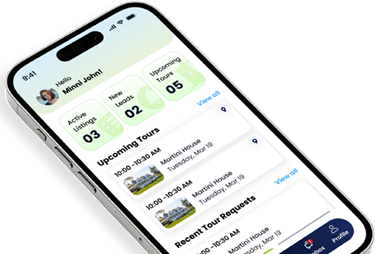
As associations continue modernizing member experiences, unified showing workflows can help reduce operational friction across scheduling, communication, and access management. Tools like InstaShow+ help support a more connected process through centralized workflows, cross-association access support, and streamlined showing coordination.
Building a Connected Real Estate Workflow Beyond AI Search
AI will continue improving how buyers and agents discover and evaluate listings. But as adoption grows, MLS organizations and associations will also need to consider how operational workflows evolve alongside these technologies.
Connected showing workflows create a more direct path from inquiry to property access. InstaShow+ helps create a more streamlined showing experience through verified identity, coordinated scheduling, and controlled property access. See how InstaShow+ supports agents, associations, and MLS organizations with a more connected path from inquiry to showing.
Stay up to date
Get the latest articles delivered to your inbox



Maximize your day in real estate with InstaShow+
Download the InstaShow+ App
Find everything you need for buying, selling and renting property in the InstaShow+ App!